
LVP & Laminate
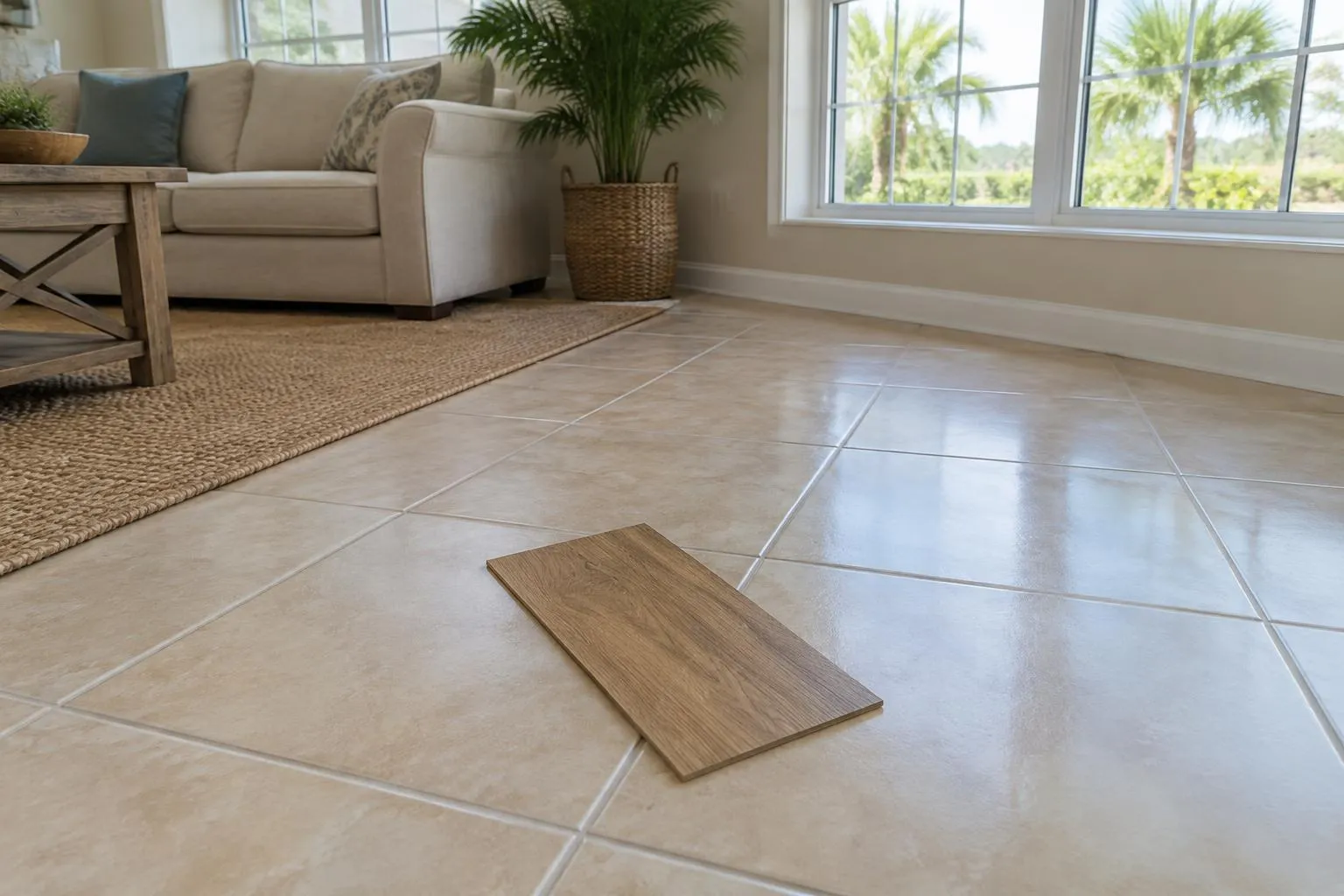
Can You Install Vinyl Plank Flooring Over Existing Tile?
Sometimes. Whether vinyl plank can go over existing tile depends on the condition of the tile, irregularities in the surface, how finished heights meet adjoining rooms, and the installation requirements of the specific flooring product you choose. The appearance of the tile alone is not enough to decide, so the floor needs to be evaluated before an approach is recommended.
Published by Imperial Buildings Development
What needs to be evaluated first
Antonio's experience is that some existing tile surfaces may be candidates for a vinyl installation over them. Others are not. The difference usually comes from details you cannot see in a photo or at a glance.
Raised tiles and other irregularities can affect the proposed installation. Loose, cracked or uneven areas change what the floor underneath the new planks will be like, so the existing surface is checked in person before anyone recommends leaving it in place.
| Condition to Discuss | Why It Matters |
|---|---|
| Tile condition | Loose, damaged or hollow-sounding tiles change whether the surface can stay under new flooring. |
| Irregularities | Raised tiles and uneven areas can affect how the new planks sit and whether preparation is needed. |
| Room-to-room heights | Adding flooring over tile raises the finished floor where it meets hallways, doorways and other rooms. |
| Selected product requirements | Each product has its own installation instructions for the surfaces it can be installed over. |
Why floor heights and adjoining rooms matter
Homes often have more than one flooring material. Antonio notes that mixed materials can already create height differences between rooms, and adding a new layer over tile can change those connections further.
Before choosing an approach, think about where the new floor will meet existing floors, doorways and thresholds. Those meeting points shape how the finished floor looks and which transitions or trim may be needed.
When preparation or removal may be needed
If the evaluation shows irregularities, damaged areas or height problems, the recommendation may involve preparation of the existing surface or removal of the tile. That is a project-specific decision, not a default.
Removal brings its own questions about concealed layers and scope, which are covered in our guide to removing tile before LVP.
Why the selected product's instructions matter
Vinyl plank products are not identical. The manufacturer's installation instructions for the product you select describe the surfaces it can go over and the preparation it expects. Those instructions, together with the actual condition of your floor, guide the recommendation.
That is why it helps to choose the product with the installation in mind, rather than buying first and checking compatibility afterward.
Questions to ask before purchasing flooring
Bring these questions to the estimate visit:
- Is my existing tile a candidate to stay in place for the product I am considering?
- Which areas, if any, would need preparation first?
- How will the new floor meet adjoining rooms and doorways?
- What do the selected product's installation instructions say about installing over tile?
- Would removal change the scope, and how would that be discussed?
Common questions
- Can I tell from a photo whether my tile can stay?
- Photos help as background, but they cannot replace an in-person evaluation of the tile and surface.
- Does installing over tile always save work?
- Not necessarily. If preparation or removal is needed, the scope changes. That is discussed after the evaluation.
Related services and guides
Find out whether your tile can stay
Antonio visits the property, confirms measurements, checks floor levels and evaluates the existing conditions before recommending the scope. On-site estimates are currently free.
Or email empire4buildings@gmail.com
Business process and project examples are based on information supplied by Antonio of Imperial Buildings Development. Published by Imperial Buildings Development.